
When Women Take the Lead: The Changing Face of Campus Politics at UPSA

“There is no limit to what we, as women, can accomplish.” — Michelle Obama
A campaign ground once dominated by male voices. Posters featuring mostly male aspirants. Political conversations in which women were often less visible than their male counterparts.
For a long time, campus politics carried the impression that leadership was a man’s game. But at the University of Professional Studies, Accra (UPSA), that narrative is gradually being challenged.
Today, more female students are stepping into the political spotlight, contesting for leadership positions, engaging in debates, mobilising support and seeking to influence decisions that shape student life.
The woman who once stood behind the campaign banner is increasingly becoming the face on it. And the student who once watched political activities from the sidelines is now daring to ask for the mandate to lead.
The growing visibility of women in campus politics represents more than a change in the faces on campaign posters. It signals a shift in how female students perceive leadership, ambition and their place in student governance.
For some, the journey begins with a simple decision: to contest. That decision, however, can carry a deeper meaning. It means being willing to stand before hundreds of students, present ideas, defend policies, withstand criticism and convince voters that they have what it takes to represent their interests.
It means stepping into a space where confidence can be mistaken for arrogance, ambition can attract unnecessary scrutiny, and the pressure to prove oneself can sometimes feel greater than the position being contested.
Yet, despite these realities, more women are willing to take the risk.
Their participation reflects the growing influence of women empowerment, access to education and the expanding opportunities for young women to express themselves and contribute to decision-making. But perhaps the most significant change is not only that women are contesting. It is that they are increasingly making themselves visible in spaces where leadership is exercised and decisions are made.
There is something powerful about seeing someone who looks like you occupy a position you once thought was beyond your reach.
When a female student watches another woman confidently campaign for office, speak before a crowd or assume a leadership role, she sees more than an aspirant. She sees a possibility. She begins to imagine herself doing the same.
That is the quiet power of representation. One woman’s courage can challenge another woman’s doubts. One woman’s victory can inspire another woman’s ambition. And even when an election is lost, the willingness to contest can encourage others to believe that they, too, deserve a place at the table.
In this sense, every woman who steps forward contributes to a story larger than her individual political ambition. She helps expand the boundaries of what other women believe is possible.
The impact extends beyond the candidates themselves. It reaches the first-year student who is still discovering her voice, the class representative who hopes to do more, and the young woman who has ideas for change but is uncertain whether campus politics has room for her. Sometimes, all it takes is seeing someone else go first.
However, celebrating the increasing participation of women should not mean pretending that every barrier has disappeared.
Female student politicians may still encounter stereotypes, unfair expectations and double standards. A woman who speaks firmly may be described as difficult, while a man displaying the same confidence may be praised for being decisive. An ambitious woman may be questioned about her motives, while ambition in a man is more readily accepted as a natural leadership quality.
These perceptions can make the political journey more demanding.
Women may also have to navigate the pressure of public scrutiny, competing expectations and the burden of proving their competence before their ideas are taken seriously.
The challenge, therefore, is not simply to encourage women to contest elections. It is to build a campus political culture in which their ideas are assessed on merit, their voices are heard without prejudice, and their leadership is judged by their performance rather than their gender.
True progress is not measured only by how many women enter the race, but also by whether they have a fair opportunity to compete, lead and succeed.
At UPSA, campus politics offers students an opportunity to learn lessons that extend far beyond academic lectures. Campaigning teaches communication and persuasion. Student governance develops negotiation, accountability and decision-making. Representing fellow students demands patience, problem-solving and the ability to listen to people with different interests.
These experiences can help prepare aspiring female leaders for careers in business, public service, media, entrepreneurship and national politics. A woman contesting for a student leadership position today may become a corporate executive, public administrator, entrepreneur or political leader tomorrow.
Her campus campaign may be one of the earliest chapters in a much bigger leadership story.
This is why female participation in campus politics matters. Universities are not merely places where students acquire academic qualifications; they are also environments where future leaders discover their abilities, test their ideas and learn to serve others.
When women are encouraged to participate fully in these spaces, the benefits extend beyond individual empowerment. Student governance also gains access to a wider range of experiences, perspectives and ideas.
Leadership should never be restricted by gender when competence, commitment and the willingness to serve are what matter most. The Future Is Not a Spectator Sport
The changing face of campus politics at UPSA offers an important reminder: progress often begins when people who have been underrepresented decide that they, too, belong in the room.
The posters are changing. The voices are becoming more diverse. More women are stepping forward, making their ambitions known and seeking the opportunity to lead. But the journey is far from complete.
The next step is to ensure that female students are not merely encouraged to contest, but are also supported throughout the process. Political parties and student groups must create inclusive spaces, voters must look beyond gender stereotypes, and the entire university community must recognise leadership potential wherever it exists.
After all, a campus where women can participate freely and compete fairly is a campus that gives more of its students the opportunity to develop their leadership potential.
The story, then, is not simply about women taking over campus politics. It is about women claiming their place in it, challenging old assumptions and creating new possibilities for those who will follow.
And perhaps the most important victory is not always the election result. Sometimes, it is the courage to step forward, the confidence to speak and the determination to prove that leadership has no gender.
At UPSA, the question is no longer whether women can lead. The question is how far their leadership can take them.
Because when one woman steps forward, she does more than enter a contest. She helps make the path wider for the next.
Kanneo Peccy Sunviela
Guest Contributor
Guest contributor to Voice of UPSA.
Loading discussion...
Related Stories & Campus Highlights
View All in Opinions →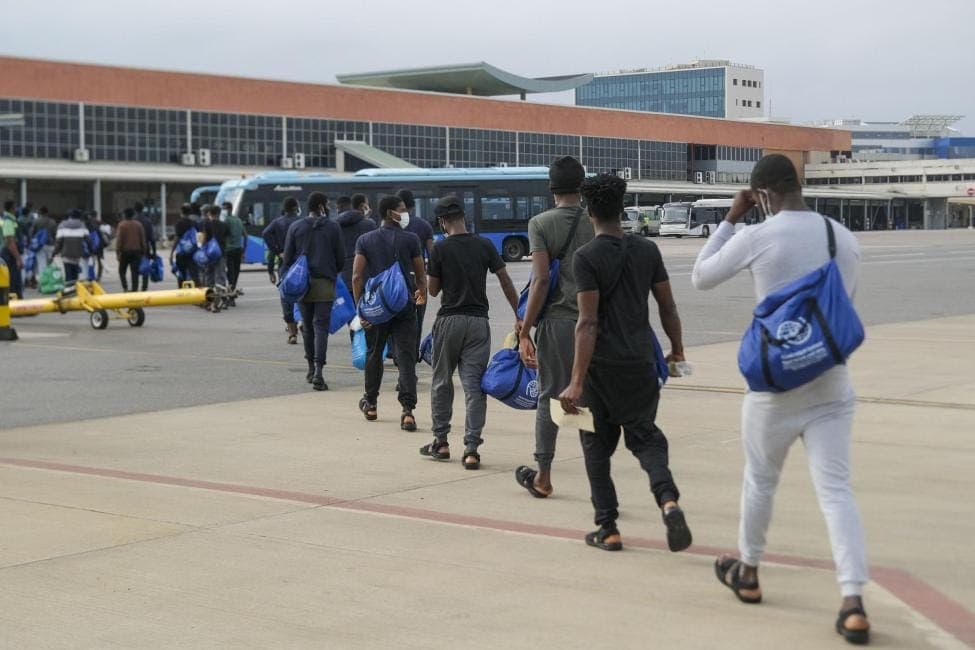
Why do some Ghanaian youths see migration as a path to a better future?
For many young Ghanaians, travelling abroad is no longer viewed only as an opportunity to experience a different country.
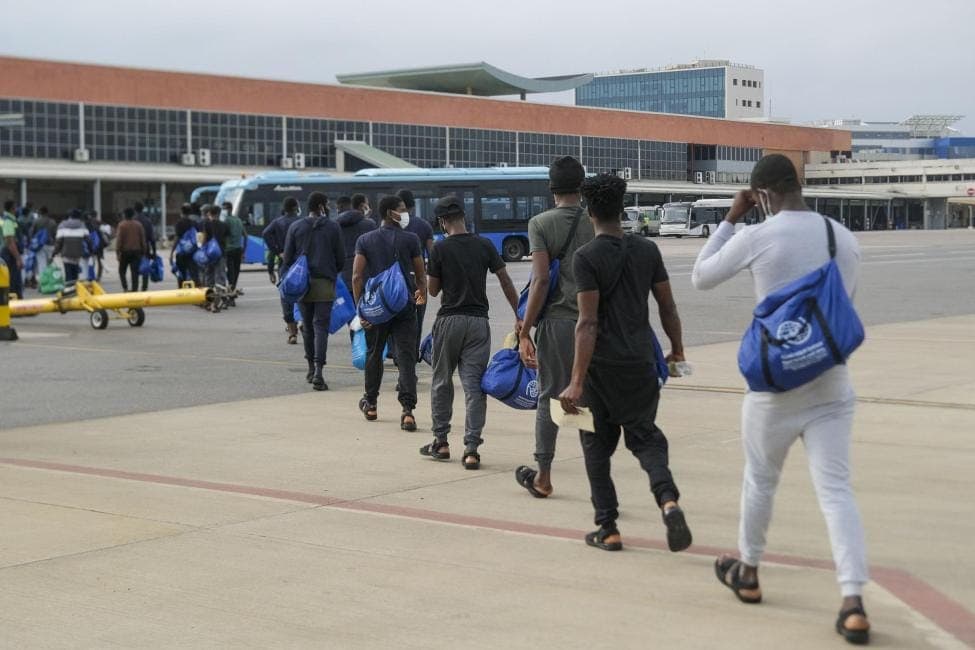
Why do some Ghanaian youths see migration as a path to a better future?
For many young Ghanaians, travelling abroad is no longer viewed only as an opportunity to experience a different country.
From my father's advice to my own story: two years at UPSA
My journey at the University of Professional Studies, Accra (UPSA) began when I first heard about the institution through my father.

If mistakes teach us, why do we call them failure?
Failure is often treated as something to be ashamed of. From the classroom to the workplace, making a mistake or falling short of a goal can make people feel as though they have lost their value.