
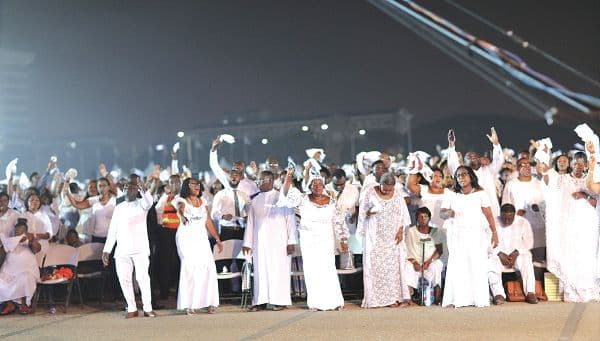
On the night of December 31, churches in Ghana fill with worshippers dressed in white, armed with prayer points, candles, and high expectations for the new year. As midnight approaches, sermons intensify, prayers grow louder, and congregations countdown together. This widely recognized event, known as the 31st night crossover service, has become one of the most established religious traditions in the country, but its origins extend far beyond modern Ghanaian church culture.
The 31st night service, traditionally called Watch Night, has roots tracing back to 18th-century Christian practices in Europe. Commonly associated with the Moravian Church, the tradition was later adopted by John Wesley, the founder of Methodism. Originally, Watch Night services were moments of reflection and spiritual renewal, allowing worshippers to assess their lives before entering a new year.
In the 19th century, this practice took on deeper social significance in the United States. On December 31, 1862, enslaved African Americans gathered in churches awaiting the impending Emancipation Proclamation, which took effect on January 1, 1863. This occasion, known as Freedom’s Eve, symbolized hope and collective anticipation, leading to Watch Night services becoming an annual observance in many Christian communities.
Christian missionaries later introduced the Watch Night tradition to Ghana through Methodist, Presbyterian, and Anglican churches. Initial services in Ghana were quiet and reflective, emphasizing prayer, scripture reading, and thanksgiving for the past year, focusing more on spiritual preparation than celebration.
As Ghana’s religious landscape evolved in the late 20th century, so too did the nature of the service. The rise of Charismatic and Pentecostal churches led to changes in structure and style, making services longer and more expressive with extended prayers and declarations marking the transition into a new year.
During this period, the term “crossover” gained prominence, popularized by Pastor Mensa Otabil, founder of the International Central Gospel Church. The term encapsulated the deliberate transition from one year to another with spiritual awareness, eventually replacing “Watch Night” in everyday language.
Today, the crossover service holds significance beyond its religious origins, attracting diverse attendees across denominations and age groups. For many, being in church on December 31 is an essential ritual to end the year, regardless of their regular church attendance throughout the year.
Church leaders describe the service as both spiritual and psychological, providing worshippers a sense of closure and collective hope amid economic uncertainty and health concerns. Crossing into a new year together fosters reassurance and continuity within the community.
The crossover service has also become a major feature of church calendars, with congregations preparing themes, prayer focuses, and prophetic directions weeks in advance. While modern practices have drawn criticism for emphasizing prophecy over reflection and the commercialization of the event, the 31st night crossover service remains embedded in Ghanaian religious life. Its significance lies in shared experiences, reflecting how religious traditions adapt to local culture and meaning over time.
SC
Selina cherita
public
Voice of UPSA editorial team member.
Loading discussion...
Related Stories & Campus Highlights
View All in Features →
Features
Sep 9, 2026 3 min read
Survivors don't wear capes: they just don't quit
Survival is not merely about staying alive; it is the courage to keep moving forward when life presents its greatest challenges. Every day, people fac...

Features
Sep 8, 2026 3 min read
Where challenges become stepping stones: a semester of promise
The reopening of school marks the beginning of another exciting academic journey filled with fresh opportunities and new challenges. Campuses that wer...

Features
Sep 6, 2026 3 min read
The library that travels
Have you ever heard of Logos Hope? Logos Hope is a ship that travels to different countries, filled with books. If you are someone who loves books, t...
Features
Aug 24, 2026 3 min read
Balancing books and bills: the struggles of working students
By 6:15 a.m., Abena Owusu-Ansah is on a trotro down the Spintex road, textbook on her knee, name tag from the supermarket tucked in her bag. Lectures ...