
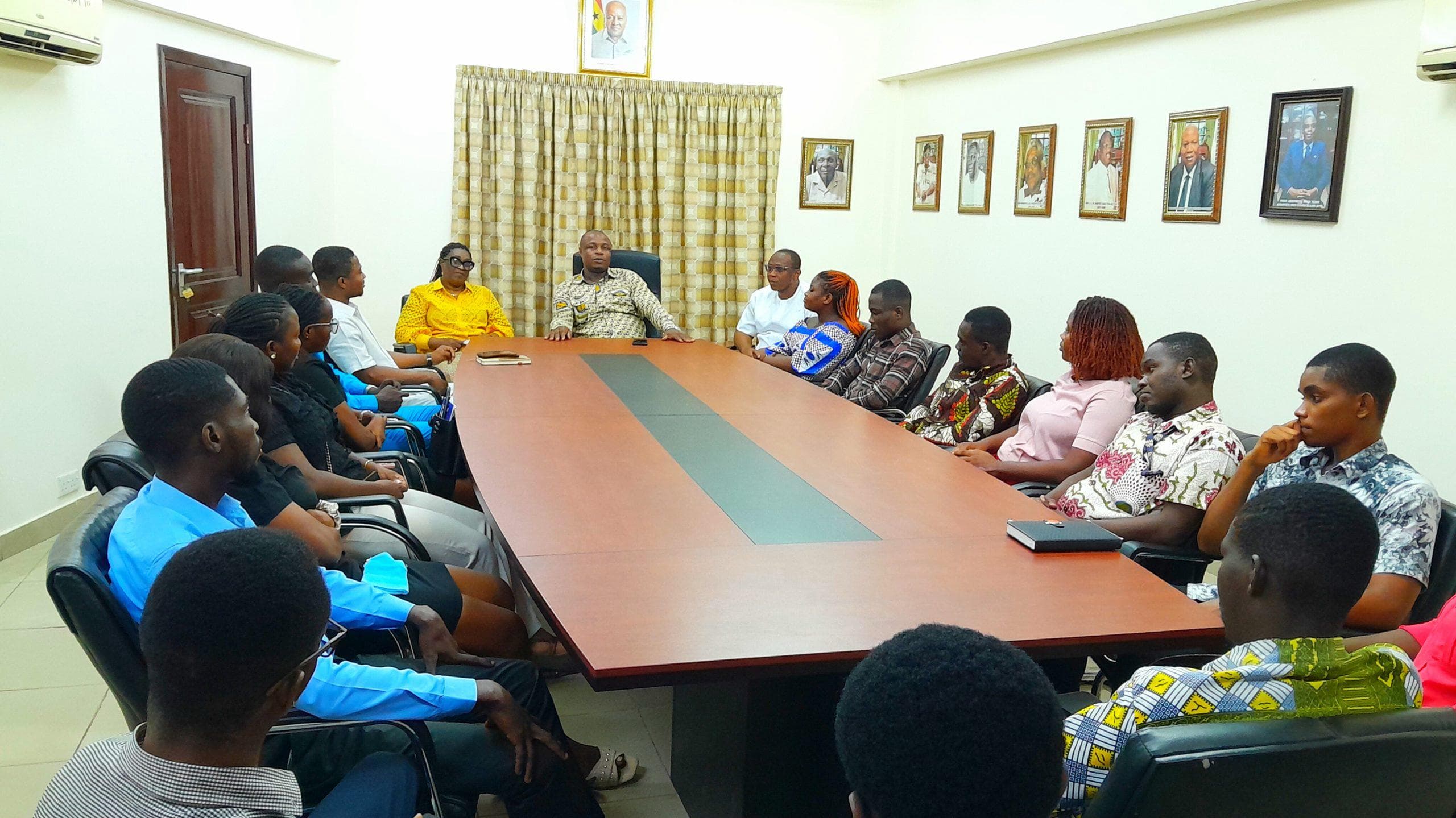
The Students’ Representative Council (SRC) serves as the democratically elected governing body tasked with representing and advancing student interests. Typically, the SRC comprises core executive positions, including the President, Vice President, General Secretary, Financial Secretary or Treasurer, and Public Relations Officer. These roles are open to all eligible students, regardless of gender, and are filled through elections conducted by the general student body.
A significant and constitutionally embedded feature of SRC governance in many institutions is the office of the Women’s Commissioner (WOCOM). This position is exclusively reserved for female students and, in institutions like KNUST, it is elected solely by female students through a secret ballot system.
The role encompasses a wide range of responsibilities, including advocating for the rights and welfare of female students; organizing seminars and programs to promote awareness of gender issues, leadership, and empowerment; and addressing challenges such as safety concerns, participation barriers, and unequal access to opportunities. Additionally, the office collaborates with internal and external stakeholders to advance women’s empowerment initiatives, including pageantry and leadership platforms. This institutional framework provides female students with a structured and recognized avenue for targeted representation.
In contrast, male students, often constituting a significant portion of the student population, do not benefit from a similarly dedicated office or commission. There is no equivalent “Men’s Commissioner” or similar structure within the conventional SRC framework to address male-specific concerns. As a result, male students rely entirely on the general executive body, whose mandate is broad and not tailored to gender-specific issues.
This imbalance raises important questions about equity and fairness in student governance. Historically, the Women’s Commissioner portfolio was established to address systemic gender imbalances, including underrepresentation in leadership, cultural barriers, and the need for empowerment and protection. Its continued existence remains vital in promoting inclusion and amplifying the voices of female students. However, changing societal dynamics and increasing strides toward gender equality call for a reassessment of existing governance structures. Male students, like their female counterparts, face distinct challenges that may warrant focused attention. These include societal expectations surrounding masculinity and emotional restraint, mental health pressures, academic competition, and other campus-related issues that may disproportionately affect them.
While the general SRC executives provide overarching representation, the existence of a specialized role for one gender without a corresponding mechanism for the other may create perceptions of imbalance in institutional design. Advancing genuine gender equity may, therefore, require the introduction of complementary structures such as a Men’s Commissioner or the establishment of a unified Gender Commissioner tasked with addressing the concerns of all students, regardless of gender. Alternatively, constitutional reforms could integrate inclusive welfare systems that eliminate gender exclusivity while maintaining targeted support. Although data indicates significant progress toward gender equality in tertiary education, SRC governance frameworks have not consistently evolved to reflect these changes. The Women’s Commissioner continues to provide essential, targeted support for female students, while male students depend on competitive general positions that, although historically male-dominated, remain open to all.
The absence of formal, dedicated representation for male students in Ghanaian universities comparable to the Women’s Commissioner presents a structural inconsistency in the pursuit of equitable student governance. This observation does not undermine the critical role played by the Women’s Commission in addressing enduring gender-specific challenges faced by female students. Rather, it calls for thoughtful evolution. As tertiary education moves toward greater equality and national priorities emphasize inclusivity, SRC constitutions and institutional practices should adapt to ensure balanced and effective advocacy for all students.
PA
Priscilla Emmanuella Adjei
admin
Voice of UPSA editorial team member.
Loading discussion...
Related Stories & Campus Highlights
View All in Opinions →
Opinions
Aug 29, 2026 3 min read
Behind the slogan: how UPSA prepares students for corporate Ghana
The University of Professional Studies, Accra (UPSA) proudly bills itself as the "Face of Professionalism." But is this a genuine reflection of what t...

Opinions
Aug 27, 2026 3 min read
Beyond the suggestion box: is the student voice really being heard?
Students are at the heart of every university, yet one question deserves more attention: How much influence do students really have on decisions that ...
Opinions
Aug 18, 2026 3 min read
Embracing the uncertainty of your 20s
Your 20s are often presented as the time when you should have everything figured out; your career, finances, relationships, purpose, and future. Socia...
Opinions
Aug 12, 2026 3 min read
Raising a child out of wedlock: is it really easy?
Raising a child is a major responsibility, whether the parents are married or not. However, raising a child out of wedlock can come with additional ch...