
Opinions
Should exams be the only measure of intelligence?
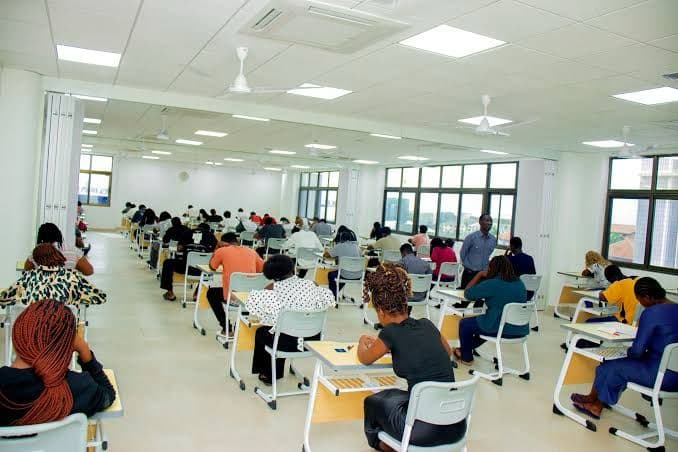
I have been thinking about this question: should exams be the only measure of intelligence? It is a topic that affects every student at some point in their academic journey. In many schools, success is often defined by how well a student performs on examinations. High scores are praised, while low scores are sometimes seen as a sign of failure. But does this truly reflect a person's intelligence? I believe that exams alone cannot fully measure how intelligent someone is.
To begin with, intelligence is a broad and complex concept. It goes beyond the ability to memorize facts and reproduce them during an exam. Some students are excellent at understanding concepts but may struggle to express themselves under pressure. Others may have creative, practical, or emotional intelligence that exams do not capture. For example, a student who can solve real-life problems, think critically, or come up with innovative ideas may not always score the highest marks on a written test. This shows that intelligence cannot be limited to academic performance alone.
Moreover, exams often create pressure and anxiety, which can affect students' performance. Many students experience nervousness during exams, causing them to forget what they have studied. In such situations, a student's score may not reflect their true ability or understanding. Intelligence should not be judged based on a few hours of testing under stressful conditions. A more relaxed and supportive environment would allow students to demonstrate their true potential.
In addition, different students have different learning styles. Some learn better through practical activities, discussions, or visual aids rather than traditional reading and writing. However, most exams focus mainly on written responses, which may disadvantage students who excel in other areas. For instance, a student who is skilled in public speaking, art, or technical work may not perform as well in written exams, yet they are equally intelligent in their own way.
Furthermore, relying only on exams can discourage creativity and independent thinking. When students focus solely on passing exams, they may resort to memorization instead of understanding concepts deeply. This limits their ability to think critically and apply knowledge in real-life situations. Education should aim to develop well-rounded individuals, not just good test-takers.
However, it is important to acknowledge that exams do have their own benefits. They provide a standardized way of assessing students and can help measure certain academic skills. Exams can also encourage discipline and hard work. Nevertheless, they should not be the only method used to evaluate intelligence. Other forms of assessment, such as projects, presentations, class participation, and practical work, should be included to give a more complete picture of a student's abilities.
In conclusion, exams should not be the only measure of intelligence. While they play an important role in education, they are limited in what they can assess. Intelligence is diverse and cannot be captured by a single method of evaluation. A fair and effective education system should recognize different talents and provide multiple ways for students to demonstrate their abilities. Only then can we truly understand and appreciate the full potential of every learner.
Related Stories & Campus Highlights
View All in Opinions →
Opinions
Aug 29, 2026 3 min read
Behind the slogan: how UPSA prepares students for corporate Ghana
The University of Professional Studies, Accra (UPSA) proudly bills itself as the "Face of Professionalism." But is this a genuine reflection of what t...

Opinions
Aug 27, 2026 3 min read
Beyond the suggestion box: is the student voice really being heard?
Students are at the heart of every university, yet one question deserves more attention: How much influence do students really have on decisions that ...
Opinions
Aug 18, 2026 3 min read
Embracing the uncertainty of your 20s
Your 20s are often presented as the time when you should have everything figured out; your career, finances, relationships, purpose, and future. Socia...

Opinions
Aug 12, 2026 3 min read
Raising a child out of wedlock: is it really easy?
Raising a child is a major responsibility, whether the parents are married or not. However, raising a child out of wedlock can come with additional ch...