
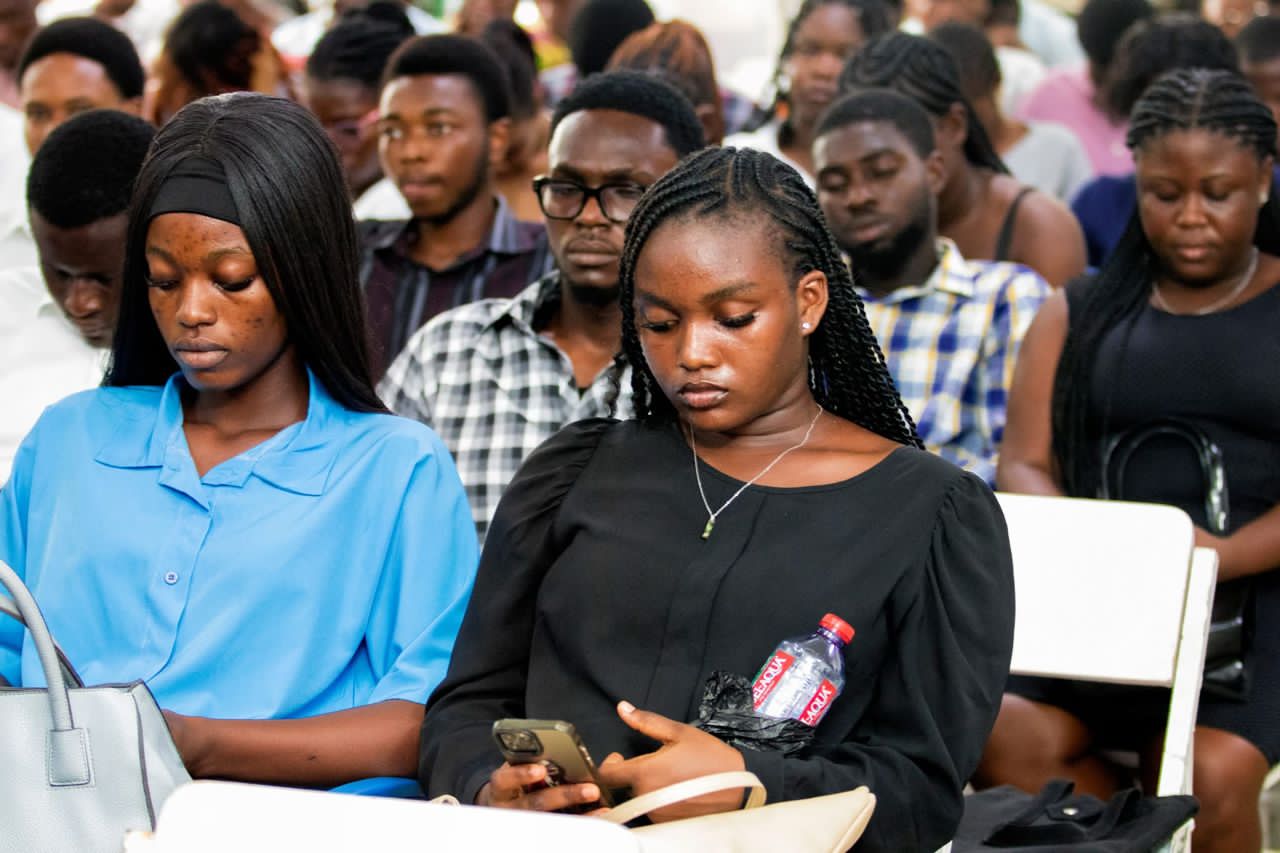
Imagine walking into your favourite lecture; the one where opinions on topics flow so naturally that the class feels more like a conversation than a lesson. Students laugh, share ideas, and interrupt with questions, making the session lively and engaging. You walk into the lecture hall while people are already chatting, but you speak to no one. You head straight to the back, sit quietly, listen throughout the lecture, take notes, and leave immediately after class ends, sometimes, even before the lecturer walks out. Then, by the next lecture, the same routine repeats itself.
Or imagine sitting beside the same one or two friends every class, exchanging only a few words, and remaining within that small circle for the entire semester. Outside those familiar faces, nobody really knows you.
For many students on campus, this is not imagination. It is their everyday reality.
According to Bruneau (2008), a silent student can be defined by “a lack of communication contact with other classroom participants”
These students attend classes, submit assignments, yet remain socially disconnected from campus life.
For many, university has quietly become less about experience and more about survival.
In many lecture halls, silence is not always a sign of disinterest; sometimes, it is fear. Some students are afraid of speaking the “wrong” English, of embarrassing themselves, of being judged by others, or of simply feeling intimidated in academic spaces.
Others are just emotionally exhausted. The academic pressure, financial struggles, long commutes, and personal stress leave little energy for social interaction. Not every quiet student is antisocial; some are overwhelmed.
Despite the constant movement and interaction on campus, a genuine connection can still feel out of reach for many students. Friendships feel temporary, people remain within small circles, and some students complete years in university without forming a single meaningful connection.
Over time, this silence can slowly lead to loneliness, poor confidence, emotional disconnection, weak networking skills, and the feeling of invisibility. Some students eventually graduate with certificates but without memories, confidence, or a true sense of belonging.
But in a world where communication, networking, and interaction matter almost everywhere, one question remains: should university be something you simply survive, or something you truly experience?
While some students graduate with certificates, others graduate with confidence, relationships, exposure, and skills that continue to shape their lives long after campus.
CK
Caroline Kasukose
editor
Voice of UPSA editorial team member.
Loading discussion...
Related Stories & Campus Highlights
View All in Features →
Features
Sep 9, 2026 3 min read
Survivors don't wear capes: they just don't quit
Survival is not merely about staying alive; it is the courage to keep moving forward when life presents its greatest challenges. Every day, people fac...

Features
Sep 8, 2026 3 min read
Where challenges become stepping stones: a semester of promise
The reopening of school marks the beginning of another exciting academic journey filled with fresh opportunities and new challenges. Campuses that wer...

Features
Sep 6, 2026 3 min read
The library that travels
Have you ever heard of Logos Hope? Logos Hope is a ship that travels to different countries, filled with books. If you are someone who loves books, t...
Features
Aug 24, 2026 3 min read
Balancing books and bills: the struggles of working students
By 6:15 a.m., Abena Owusu-Ansah is on a trotro down the Spintex road, textbook on her knee, name tag from the supermarket tucked in her bag. Lectures ...