
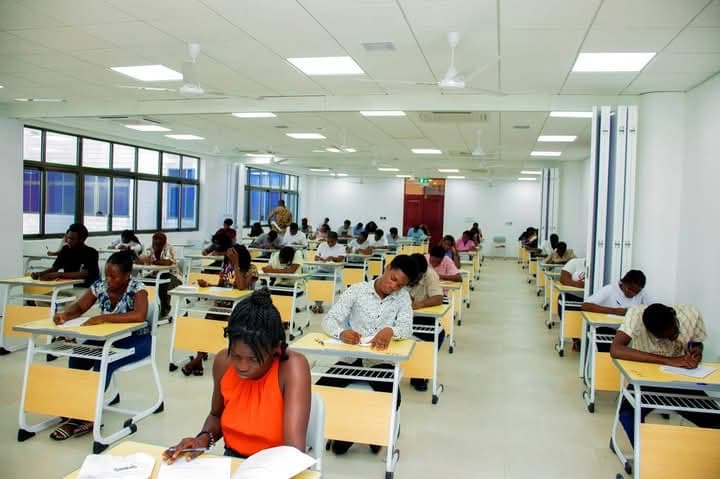
In many Ghanaian classrooms, like Field Engineers 'B' Basic School, a familiar ritual plays out every examination season. Students are asked to draw and label a tilapia, a flask, a leaf, a beaker, and write memorized definitions like: "Science is a method of obtaining knowledge through observation and experimentation," "Self-pollination is the transfer of pollen grains from the anther to the stigma of the same flower," among many other definitions, just for full marks. We pass, we celebrate, and we move on to the next class after two semesters, and another cycle continues. But years later, a quiet question echoes: What did we really learn to do with these things beyond the exam hall?
Most students have drawn a tilapia more times than they have learned the practical skills of farming, processing, or packaging it—skills essential for creating a business. We labeled its fins and gills perfectly, yet nobody showed us how aquaculture could create jobs, improve nutrition, or build exports. Yes, Agricultural Science students in Ghanaian Senior High Schools (SHS) learn how to farm tilapia as part of their vocational training, but this practicality is often absent because many senior high schools, such as St. Paul's Boys Senior High School and Minor Seminary, lack the necessary tools and equipment for hands-on agricultural training.
However, on 24 October 2025, the Vice Chancellor of the University of Cape Coast, Sam Jonah, stated in an interview on GHone TV's Starr chat show that every senior high school should establish a fish farm to enhance practical lessons and meet students' protein needs.
Consequently, the tilapia most students know is the one they buy to eat, marking the boundary of their education on the subject.
The same goes for the flask, beaker, flower, and a lot more. We memorized their names and shapes, wrote definitions word for word, and aced the test and examination. But how many students were guided to use that knowledge to solve real problems like water purification, simple laboratory testing for community health, or small-scale innovation? For many, the flask became just another household item—useful, yes, but disconnected from the science we were taught to master.
This gap reveals a deeper issue. Our current curriculum still carries systemic weaknesses that limit students' potential in a fast-changing 21st-century era. It rewards recall over creativity, neat answers over useful skills, and examination success over real-life impact. We train students to pass, not to build.
Meanwhile, the Ghanaian youth are bursting with ideas. We are digital natives, hustlers, creators, and problem-solvers. Give us the right tools and guidance, and we will design apps, grow businesses, modernize agriculture, and invent solutions tailored to our communities. But too often, school feels like the Kwame Nkrumah Museum, full of knowledge displayed behind glass, when it should be a workshop fostering practicality, innovation, and knowledge.
Education should connect the classroom to the street, the lab to the market, and theory to purpose. Drawing a tilapia should lead to learning about sustainable fish farming. Labeling a flask should open doors to experiments that tackle local challenges. Exams should test not only what students remember, but what they can do.
This is not a call to throw away fundamentals. It is a call to make them meaningful. Let our lessons reflect the world we are stepping into, one that values innovation, adaptability, and practical impact. When education becomes relevant, students would stop asking, “Will this come in the exam?” and start asking, “How can this change my life and my community?”
If Ghana wants a future powered by its youth, then our education system must stop teaching for yesterday’s tests and start preparing us for tomorrow’s work. Because a nation cannot draw its way to development, it must build it. The time to act is Now!
NC
Noel Mawuedem Coffie
editor
Voice of UPSA editorial team member.
Loading discussion...
Related Stories & Campus Highlights
View All in Academics →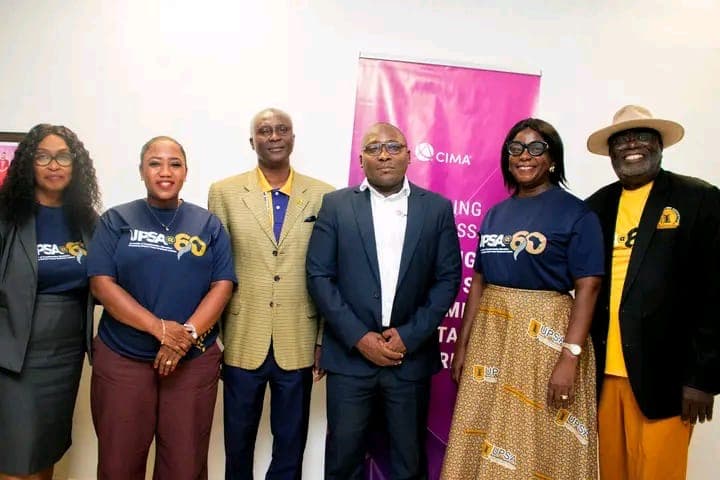
Academics
Feb 26, 2026 3 min read
UPSA@60 strengthens ties with CIMA-Ghana ahead of IPS relaunch
The UPSA@60 Anniversary Planning Committee has paid a courtesy call on the Chartered Institute of Management Accountants (CIMA)-Ghana as part of stake...
Academics
Feb 25, 2026 3 min read
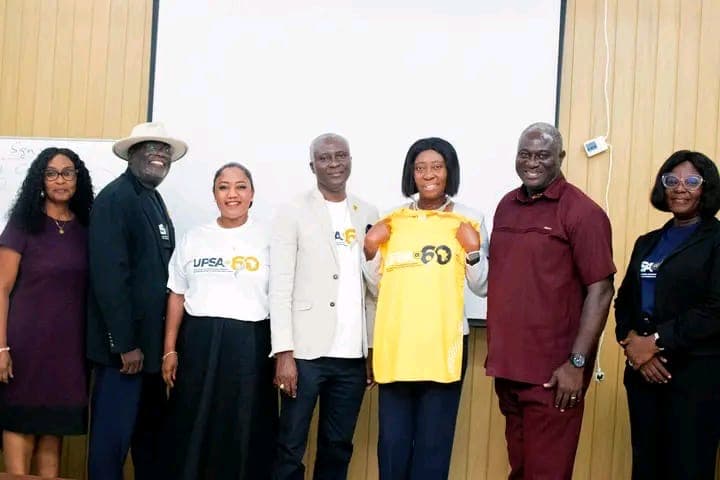
Upsa@60 strengthens strategic ties with CITG ahead of diamond jubilee
The UPSA@60 Anniversary Planning Committee paid a courtesy visit to the Chartered Institute of Taxation Ghana (CITG) on Tuesday, February 24, 2026, as...
Academics
Feb 25, 2026 3 min read
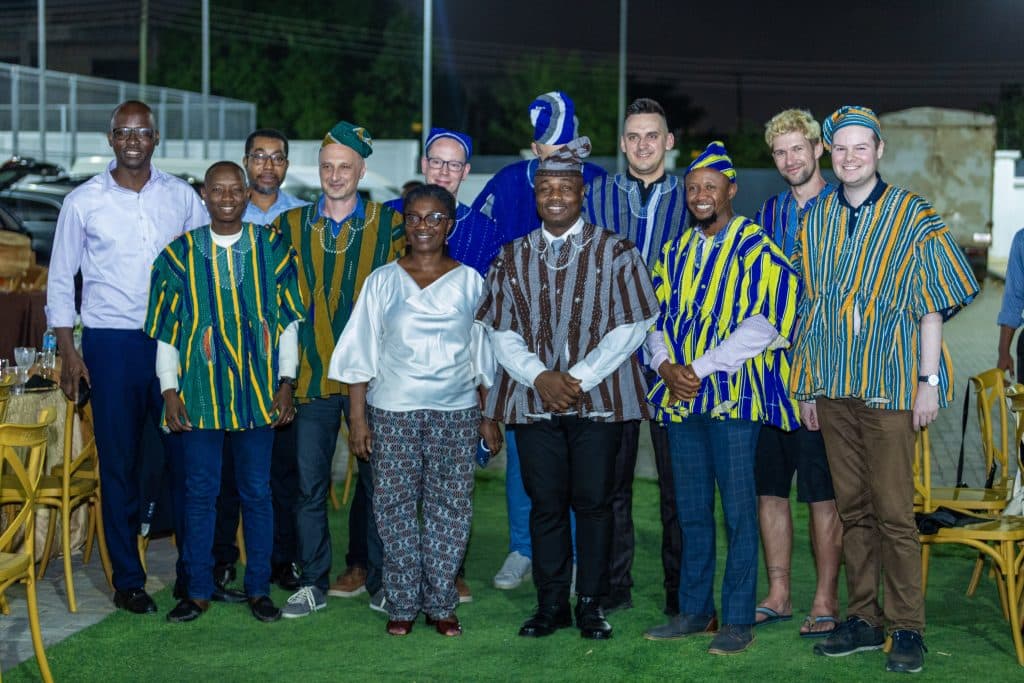
UPSA champions cultural identity through National Fugu Day celebration
The University of Professional Studies, Accra (UPSA) proudly joined the national observance of National Fugu Day, reaffirming its commitment to promot...
Academics
Feb 24, 2026 3 min read
UPSA strengthens international collaboration through Erasmus+ staff mobility engagement with EKA University of Applied Sciences
The University of Professional Studies, Accra (UPSA), has today welcomed a delegation from EKA University of Applied Sciences, Latvia, for a one-week ...